Ruvqiron
Axis Kit
Axis Kit
Couldn't load pickup availability
Share
- Problem Statement
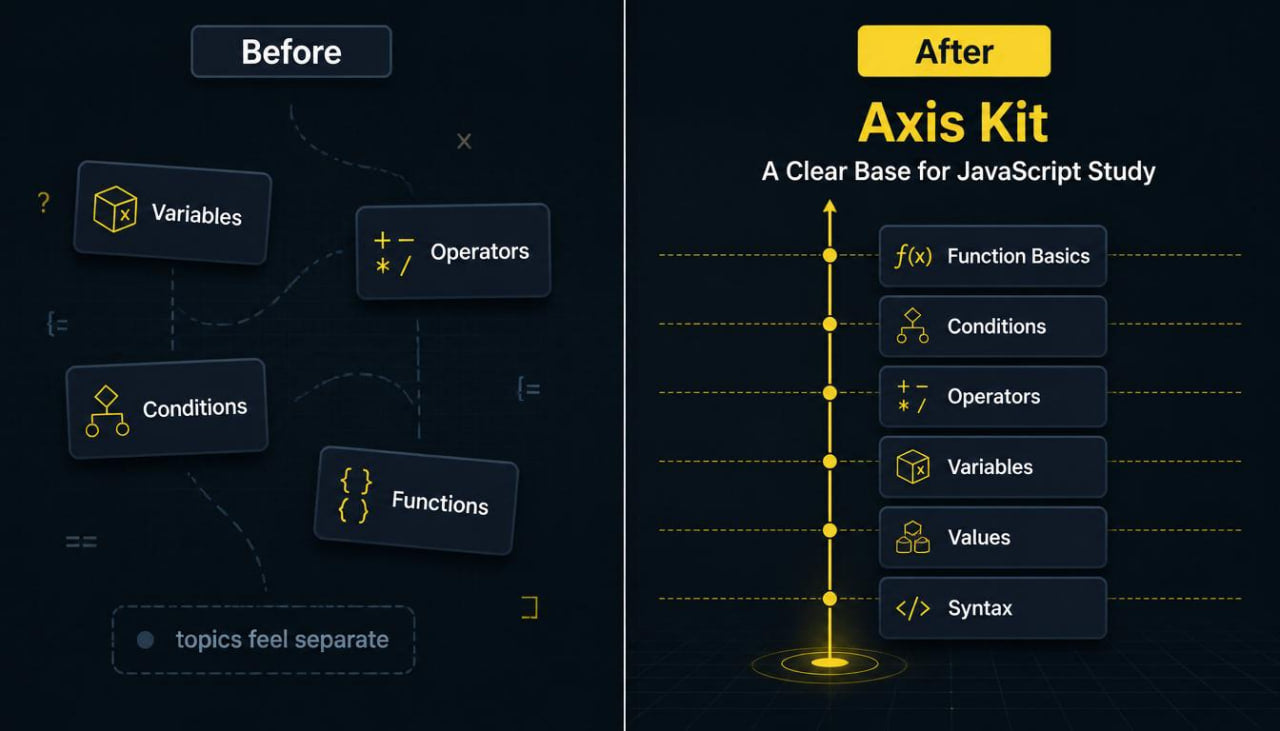
Many learners begin JavaScript with separate pieces of information that do not feel connected. One page may explain variables, another may introduce conditions, and another may show functions before the learner has enough time to understand how the earlier ideas work together. This can make the study process feel uneven, especially when examples become longer without enough context. A learner may understand one code line in isolation but still feel unsure when several lines appear together. Axis Kit was created to place the first JavaScript ideas into a more organized learning path with enough explanation between topics.
- Solution
Axis Kit gives learners a structured entry into JavaScript through short modules, practical examples, and review-friendly explanations. The materials begin with core syntax and gradually move into values, variables, operators, conditions, and simple function structure. Each topic is introduced with a clear explanation, followed by code examples and tasks that ask the learner to observe, adjust, and rewrite small parts of code. The course does not rely on inflated claims or pressure-based language. It is intended to help learners build a steady study routine around JavaScript basics.
- What’s Inside
Axis Kit includes a set of beginner-friendly JavaScript materials arranged around the first topics a learner usually needs to understand. The opening module explains how JavaScript code is written, how statements are arranged, and why small details such as punctuation, spacing, names, and values matter during study. This part gives learners a careful reading frame before they move into longer examples.
The next module focuses on variables and values. It explains how names can be used to store information and how different values can appear in JavaScript examples. Learners review text values, number values, and simple true-or-false values through short code samples. Each example includes a note that points out what changed and why that change matters.
Axis Kit also includes a section on operators. This part explains how JavaScript can work with numbers, compare values, and combine small pieces of information. The examples stay compact so learners can study one idea at a time. Practice tasks invite learners to adjust values, compare outputs, and rewrite short expressions using the same structure.
Another module introduces conditions. Learners explore how code can follow different paths depending on a value or comparison. The materials show simple condition blocks, explain how each part is arranged, and give small practice prompts. The focus is on reading the structure carefully rather than rushing into longer code.
A separate section introduces functions at a beginner level. It explains how a function can group a small action under a name and how that named block can be reused inside examples. Learners see simple function declarations, short calls, and examples with values passed into a function. The explanations avoid heavy terminology and keep attention on what the code does line by line.
Axis Kit also contains practice pages built around small tasks. These tasks may ask the learner to complete a missing value, rename a variable, adjust a condition, explain a code line, or compare two short examples. The tasks are designed for written practice and careful review. They are not built around pressure or unrealistic outcomes.
The course includes review blocks after key modules. These review blocks summarize the topic, repeat useful vocabulary, and give the learner a place to return before moving forward. For example, after the variables section, the review block may repeat the difference between a name and a value. After the conditions section, it may summarize how comparisons guide a code path.
Axis Kit also includes a glossary with beginner JavaScript terms used throughout the materials. The glossary explains words such as variable, value, string, number, boolean, operator, condition, function, parameter, and return. Each explanation is written in plain wording and connected to the examples from the course.
In addition, the tier includes small reading notes that help learners study code more carefully. These notes explain how to slow down when reading a code sample, how to look for names and values, how to trace a condition, and how to compare one version of an example with another. This makes the materials useful not only for learning terms but also for building better study habits.
- Who Is This For?
Axis Kit is for learners who want more than a sample module but still prefer a calm beginning. It is suitable for people who are new to JavaScript and want written materials with examples, tasks, and review sections. It can also work for learners who have seen JavaScript before but want to revisit the basics in a more organized way. This tier is a good fit for people who prefer reading and practicing in small steps rather than jumping into large projects immediately. It is also helpful for learners who want to understand how basic code pieces connect before moving into wider JavaScript topics.
- What You’ll Learn
- How JavaScript statements are structured
- How variables store and reuse values
- How text, number, and true-or-false values appear in examples
- How operators work with values and comparisons
- How simple conditions guide different code paths
- How beginner function structure is written and read
- How to compare short code examples
- How to complete small JavaScript practice tasks
- How to use review blocks for repeated study
- How to read JavaScript examples with more attention to structure
- How core JavaScript terms connect to practical code samples
- How to prepare for broader modules in the next Ruvqiron tiers
- Refund Terms
Axis Kit includes a 30-day refund review period for paid course materials. If the materials do not match what you expected from the course description, you can contact Ruvqiron support within 30 days after purchase. Please include your order details and a short note about your request. The team will review the message and respond with the next steps according to the store policy.
Self-paced learning overview
- 📁 Digital file available after purchase
- 🗂️ Long-term availability
- 🔒 Secure checkout
- 🗓️ Content updated in 2026
What format are the Ruvqiron course materials provided in?
What format are the Ruvqiron course materials provided in?
The Ruvqiron course materials are provided as digital learning files. They are created for reading, practice, review, and self-paced study. Each tier has its own amount of modules, examples, tasks, and learning notes.
Do I need previous JavaScript knowledge before starting?
Do I need previous JavaScript knowledge before starting?
No previous JavaScript study is needed for the starting tier. The first materials introduce basic ideas in a calm and structured way. Wider tiers add more topics, more practice tasks, and more detailed explanations.
How can I study the materials?
How can I study the materials?
You can study the materials at your own pace. Each module can be read separately, reviewed again later, and used with practice tasks. The course structure is made for learners who like organized written explanations and coding examples.